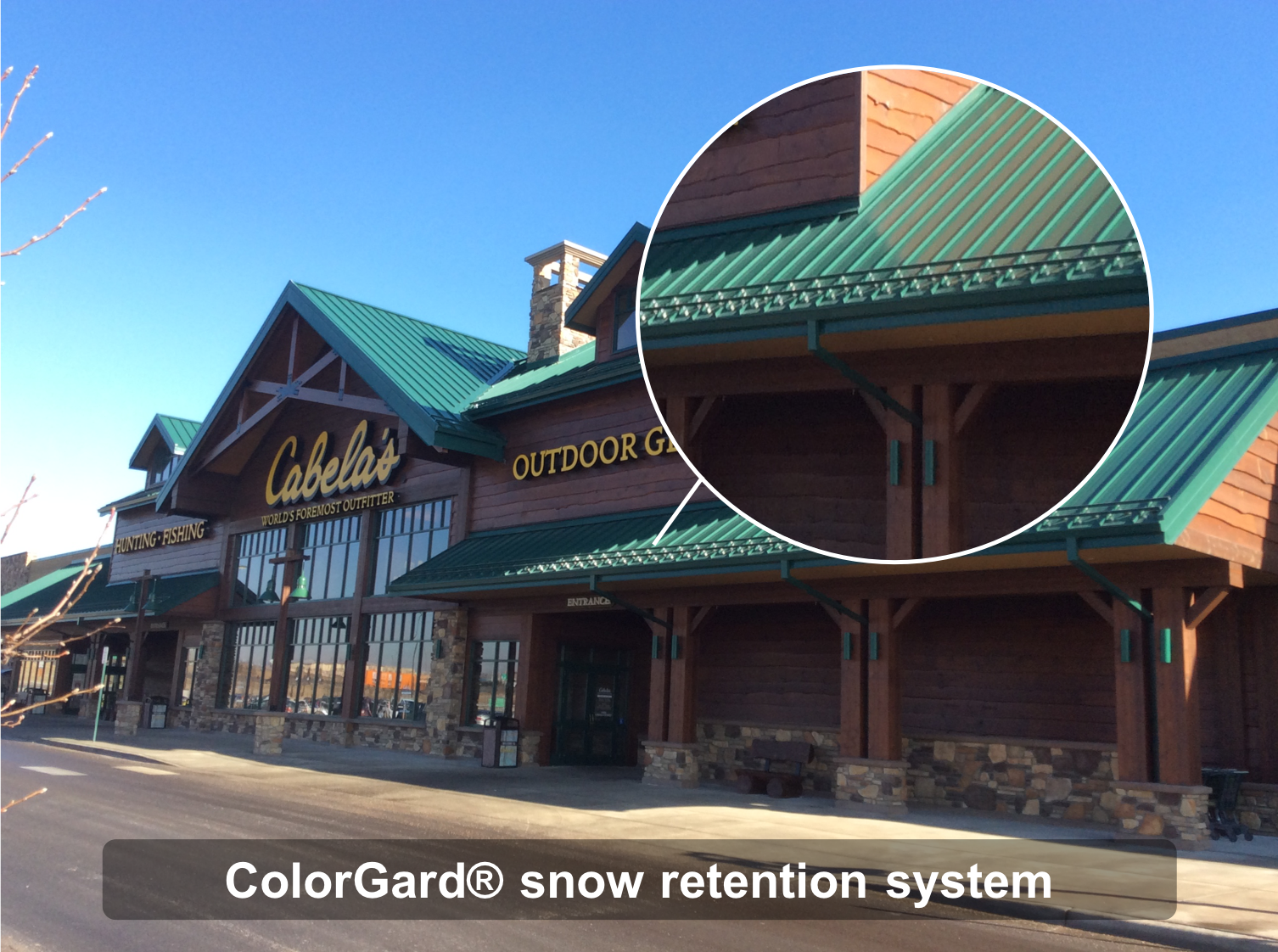
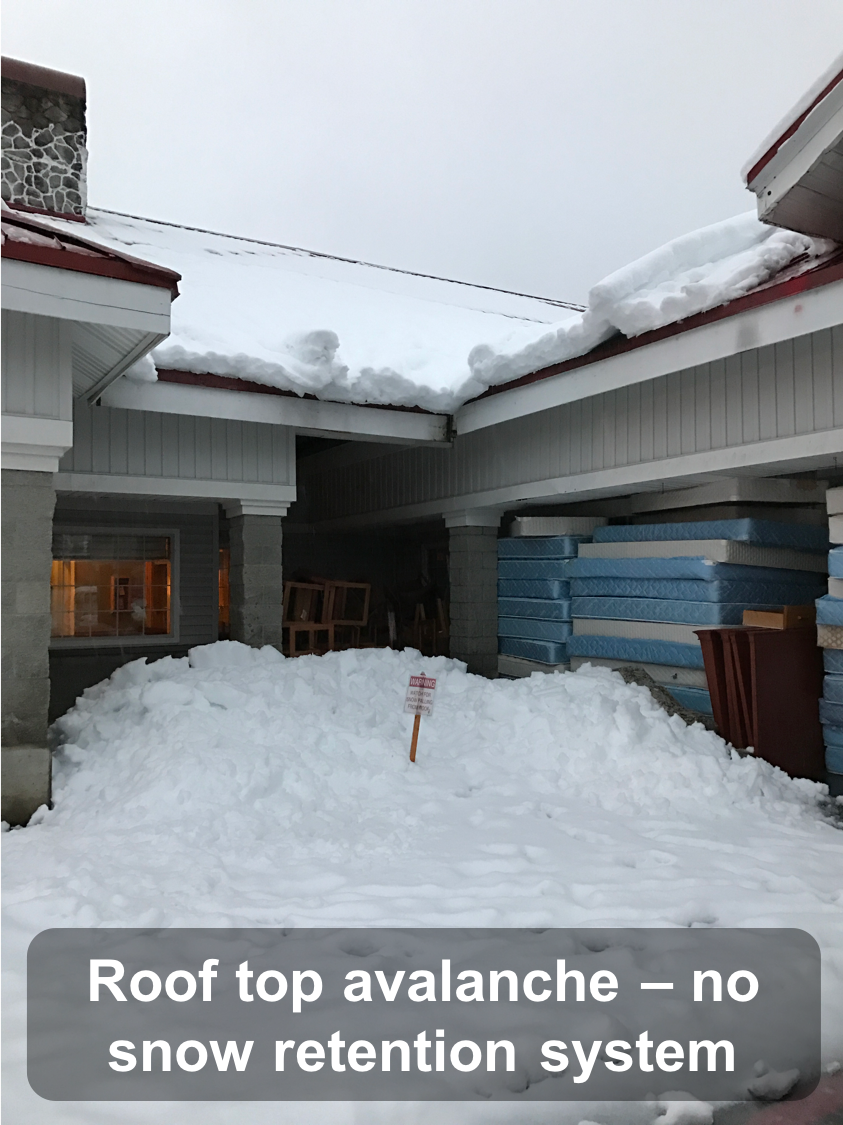

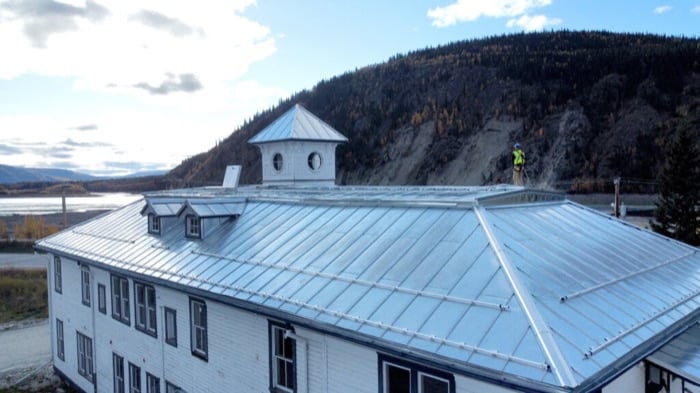
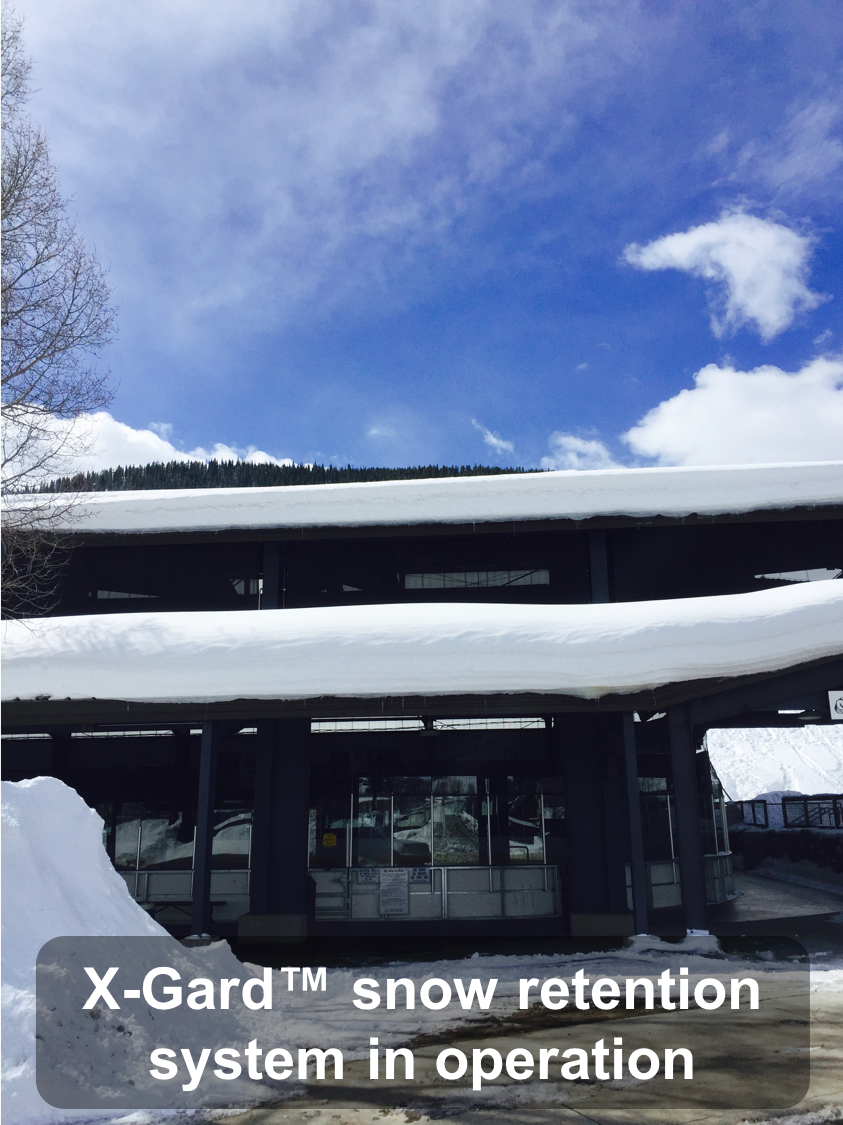
Los tejados metálicos son una decisión inteligente. Pero con los tejados metálicos, debe tener en cuenta el riesgo de avalanchas en la parte superior del tejado. Un sistema de retención de nieve de calidad le ayudará a mantener su tejado, evitar daños personales y materiales y permitir que la nieve se derrita de su estructura de forma eficaz y segura. Pero existen varios métodos para montar sistemas de retención de nieve. ¿Cuál es la mejor manera?
Si posee una propiedad con un tejado metálico en la región de las nieves, sin duda comprende la importancia de la retención de la nieve. Ya sea residencial o comercial, ya ha tomado una decisión inteligente al elegir un tejado con la mayor vida útil posible.
Los tejados metálicos son, de hecho, una "pendiente resbaladiza" (valga el juego de palabras), ya que hay que tener en cuenta el riesgo de avalanchas sobre el tejado (peligro personal y daños materiales), así como la necesidad de mantenimiento para retirar la nieve.
A quality snow retention system will help you avoid these drawbacks, allowing the snow to melt safely away, providing decades of trouble-free service of your roof.
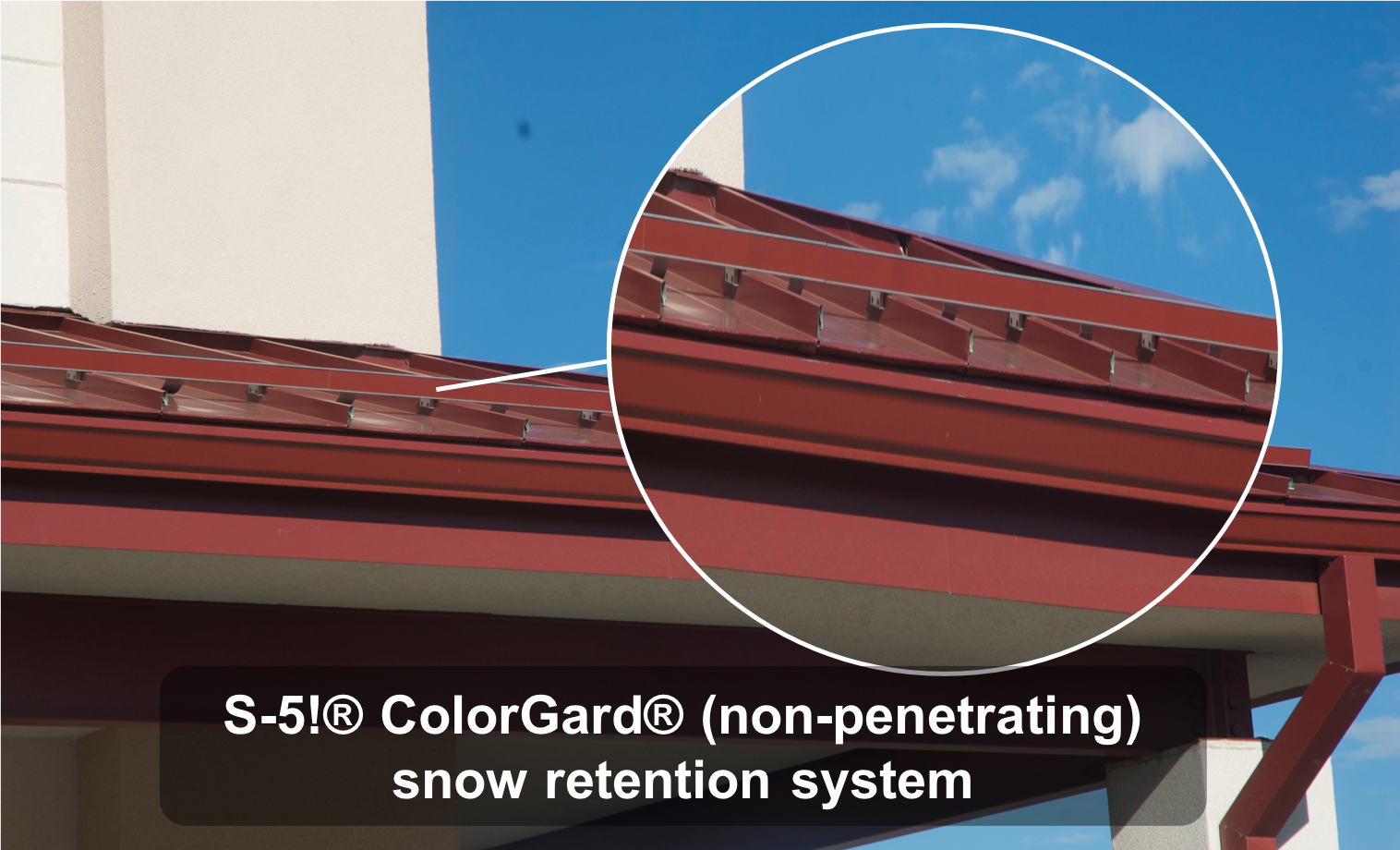
Existen tres métodos básicos para montar sistemas de retención de nieve en los tejados.
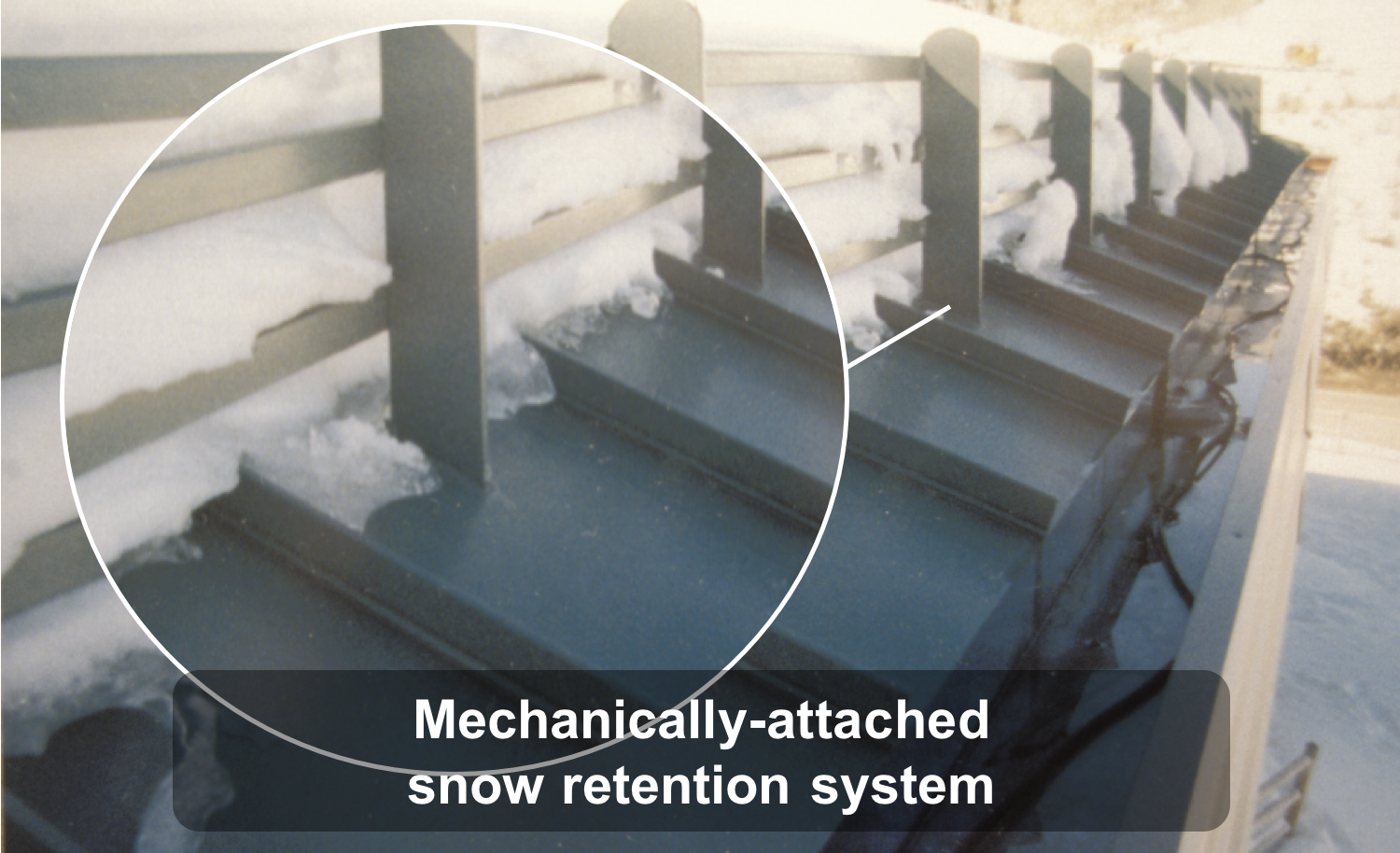
• Two designs are mechanically-attached, using the process of either clamping to the seam (non-penetrating) or screwing through the roof material (penetrating).
|
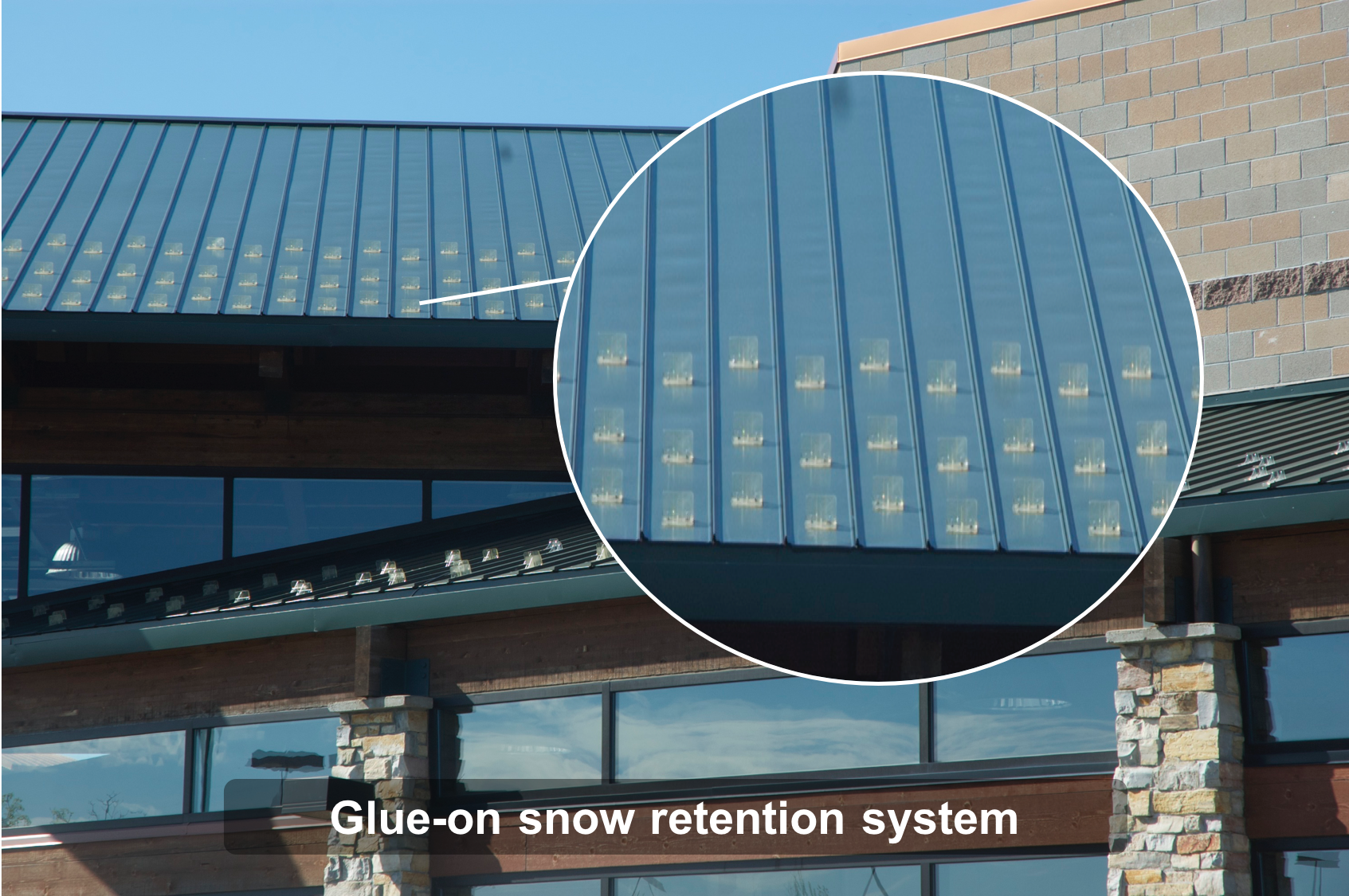
- El tercero está adherido químicamente y utiliza un método de "pegado", que consiste en pegar las protecciones individuales contra la nieve al tejado.
 |
An important note in respect to mechanically-attached systems is the distinction between clamping and drilling a snow retention system onto a roof. Drilling requires holes. And holes in a metal roof need to be properly weather-proofed to prevent leakage. At S-5!, we manufacture and market clamps and brackets to reliably mount snow guard systems to metal roof seams with clamps and setscrews that compress the seam material against the opposite wall of the clamp – dimpling the material, but not penetrating it - and without creating holes. For roof profiles that do not allow this clamping technology, we also offer penetrative attachments—but with some special (and vital) features. The sealants we use for waterproofing the holes created are designed to last the life of the roof. They are also protected from harmful UV sunlight—and they utilize part designs that prevent over-compression which can also compromise their service life. AND we test and warrant their performance in accordance to ASTM E 2140.
|
|
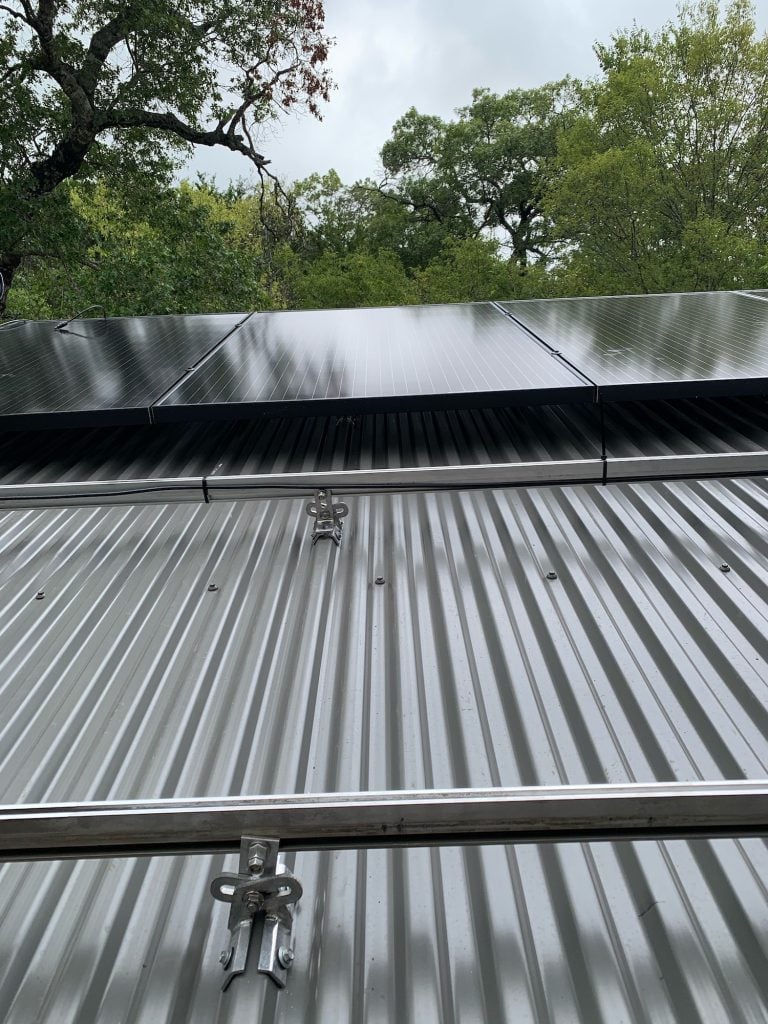
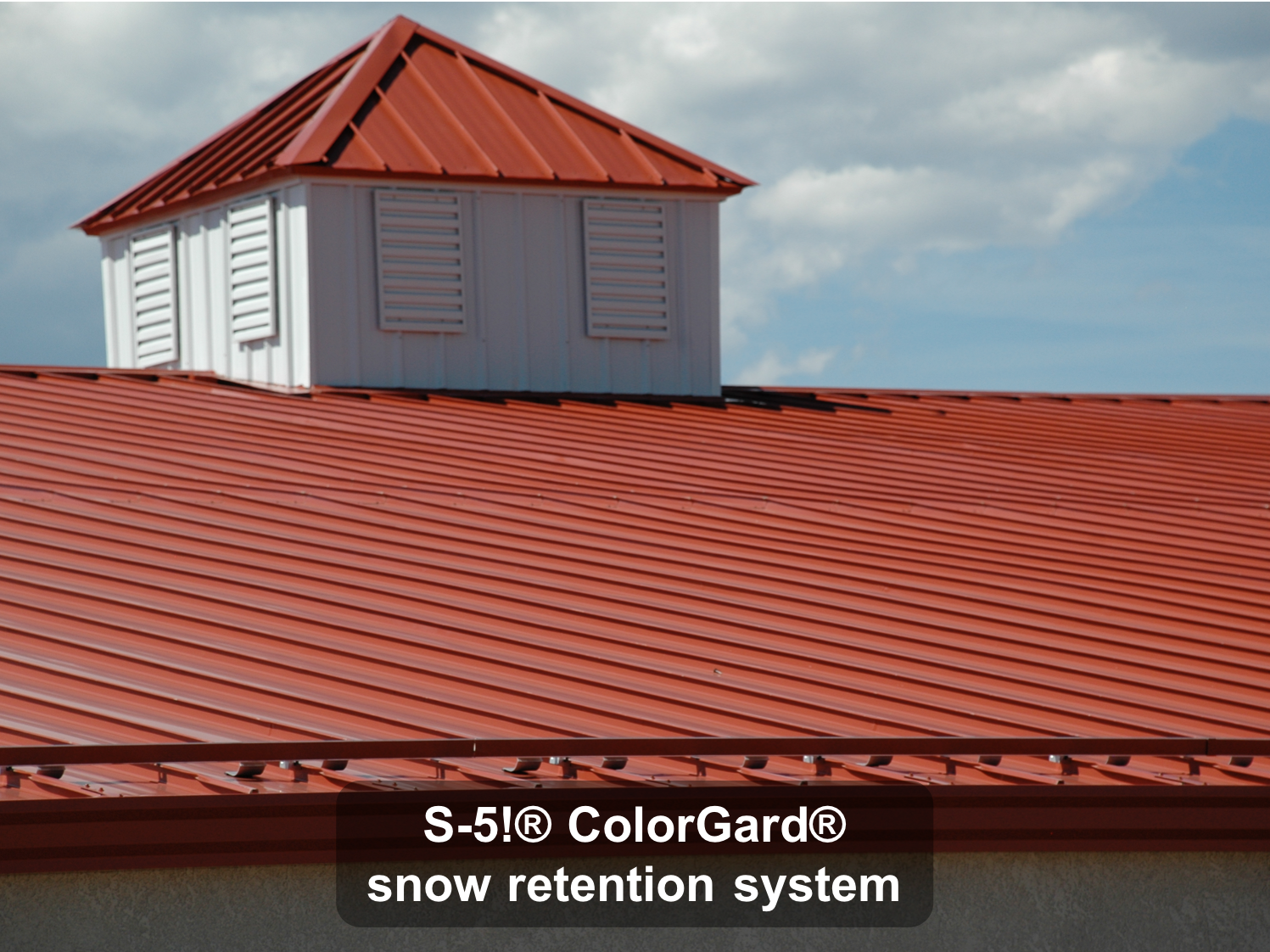
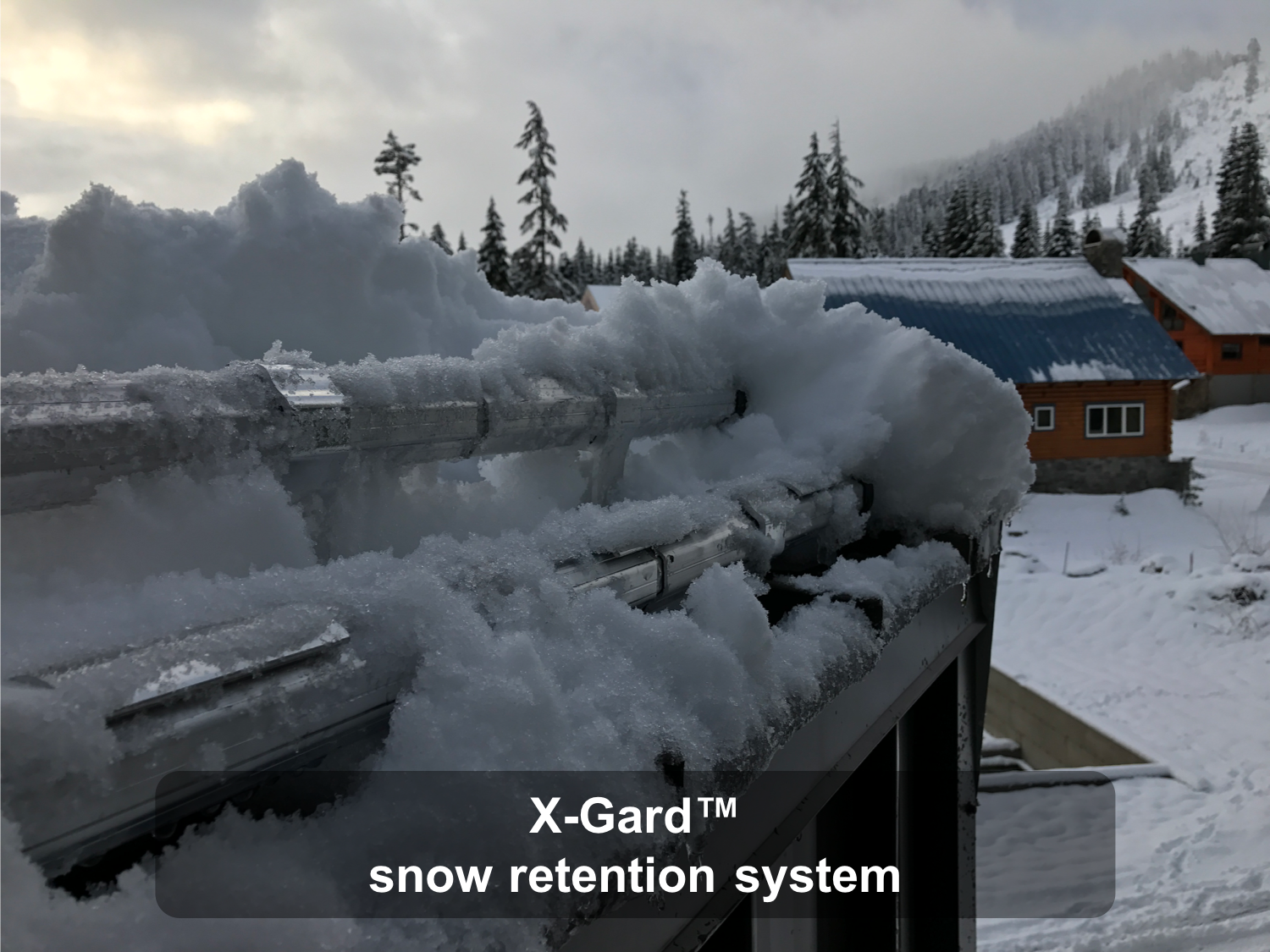
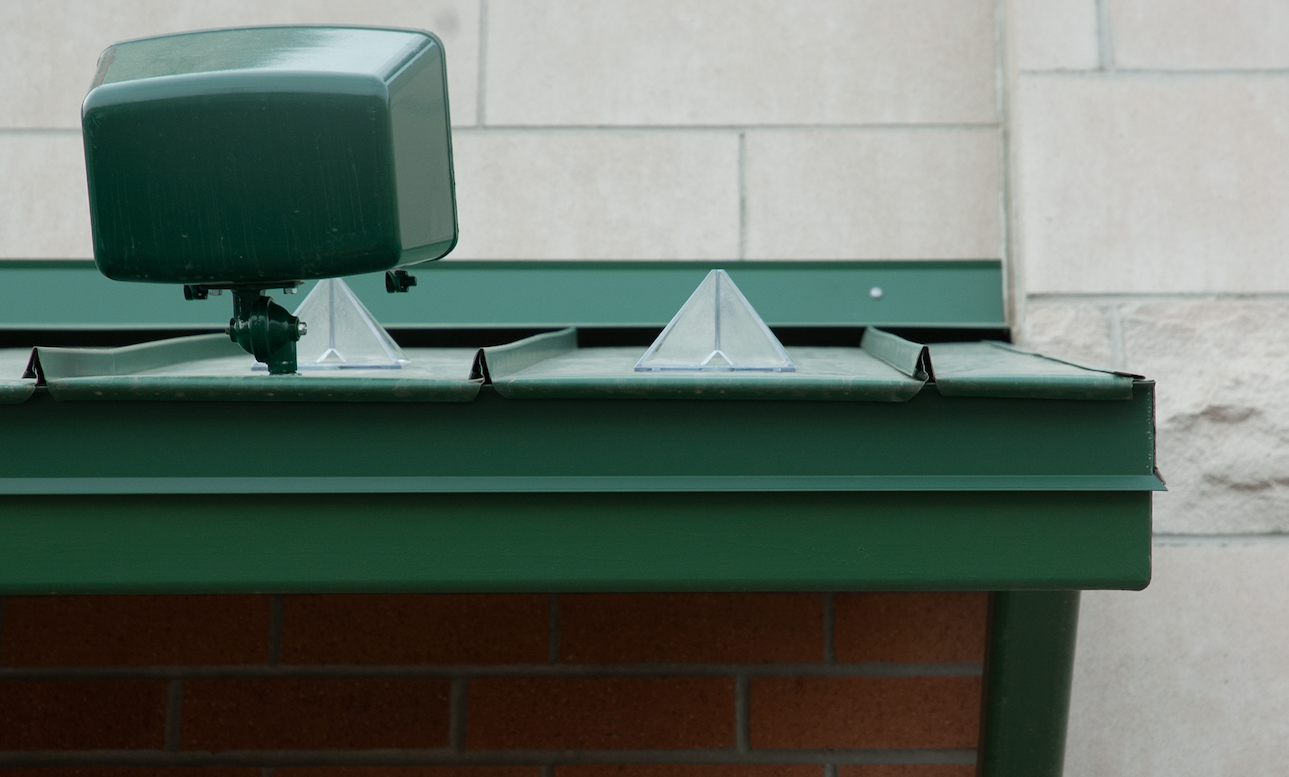
Este primer método utiliza un accesorio de sujeción de la costura. Se trata de una opción sólida y segura si el tejado es metálico con junta alzada. Las abrazaderas se fijan directamente a la costura del tejado mediante tornillos prisioneros pulidos de punta redonda que no penetran en el metal (fijación mecánica).
 |
|
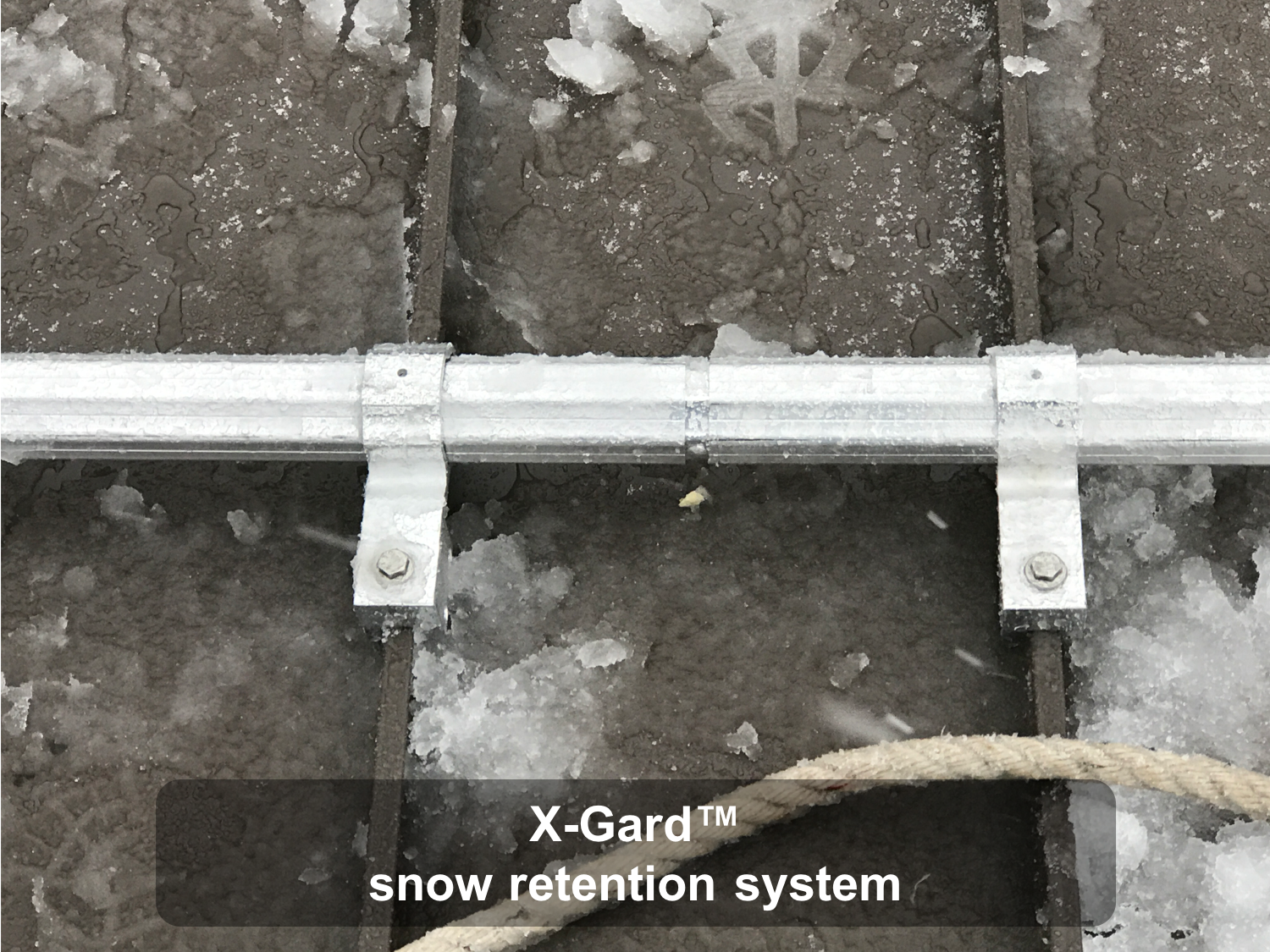 Espere esto con el montaje con abrazadera
When this method is used, the sliding force of the snow is transferred to the clamp and then into the roof panels themselves. The holding strength of such a system should be documented through rigorous testing and must be able to resist the loads to which it is exposed. These loads do vary from job-to-job. Here at S-5! we have tested our clamps with almost every metal roof profile available. You can view these results directly on our website at S-5.com under the “Load Test Results” tab located at the bottom of the page.
{{cta(‘177210f6-6753-4abf-8d8e-584d19f8445e’,‘justifycenter’)}}
El segundo tipo de retención de nieve es un sistema que se fija a través del tejado y en la estructura del edificio (también una fijación mecánica).
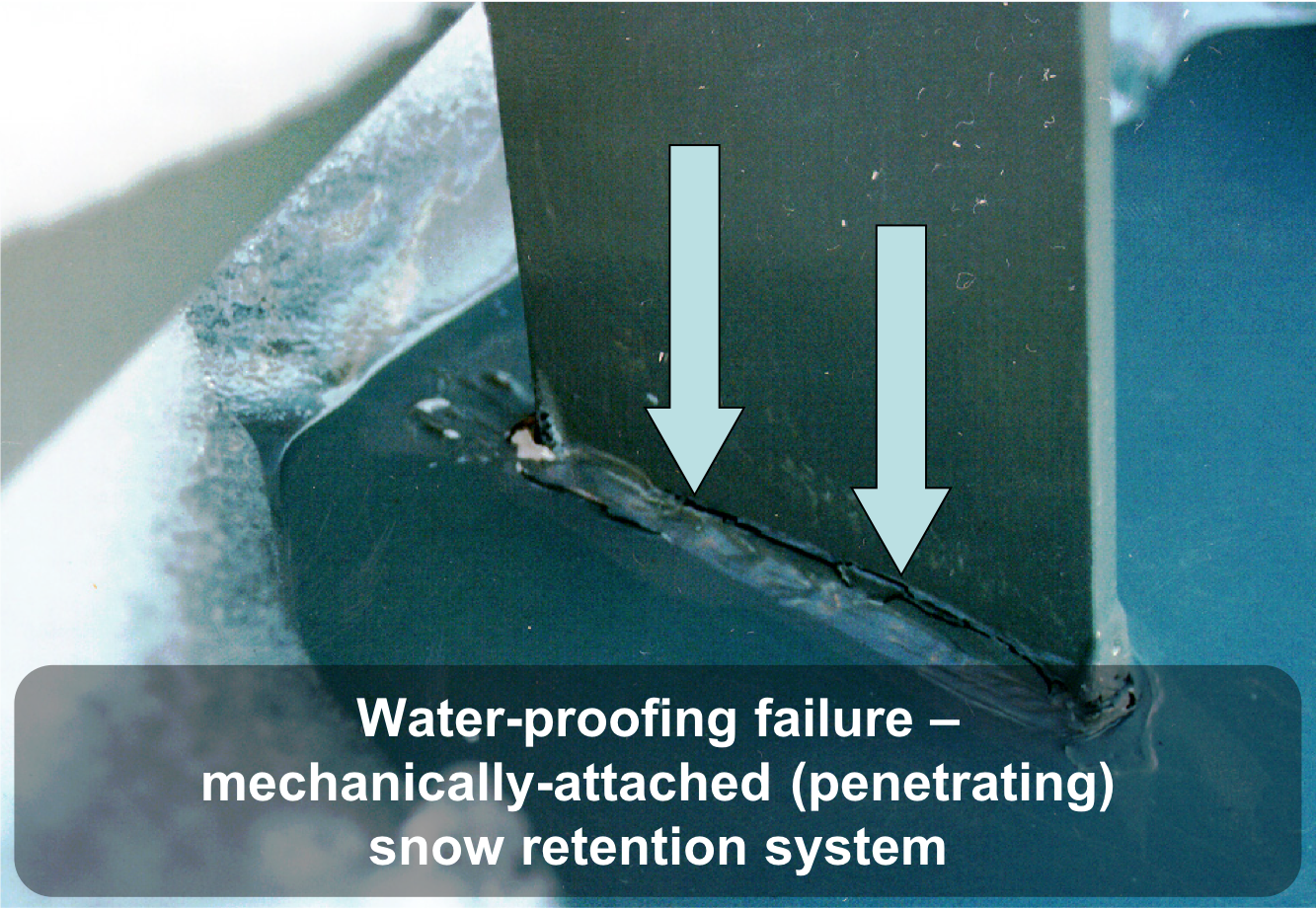
With snow guards that attach directly to the structure, holes will need to be drilled (or other penetrations required) to anchor snow guard brackets, to ensure secure placement and the long-term service life of the roof. If this is not done correctly, you run the risk of developing leaks. To accomplish this, prior to installation with other (non-S-5!) products, you will need to perform additional steps to waterproof these roof penetrations, and you will have to know something about sealant chemistry, part design, sealant selection/sourcing, etc.). With S-5! components, we take the guesswork out and provide an appropriate system with sealants factory-applied. You simply remove the protective release paper and install.
Una vez más, la resistencia del método de montaje de la fijación estructural también es importante y debe probarse y ajustarse a las cargas en servicio a las que estará expuesta la protección contra la nieve. En S-5, eliminamos la magia de todo esto con herramientas basadas en la web, que le permiten hacer todo esto de forma rápida y sencilla. Y estas resistencias de sujeción probadas, demostradas y científicas se diseñan en función de las características específicas de su proyecto, y no utilizando las valoraciones "a ojo de buen cubero" de alguien.
{{cta(‘39ba9b6e-ad54-461a-ba95-d72626296534’,‘justifycenter’)}}
El tercer tipo de retención de nieve es una pieza pegada (adherida). Algunas variantes emplean un adhesivo aplicado en fábrica(adhesión química) y otras uno aplicado sobre el terreno. A primera vista, los sistemas adhesivos parecen una opción muy cómoda y económica.
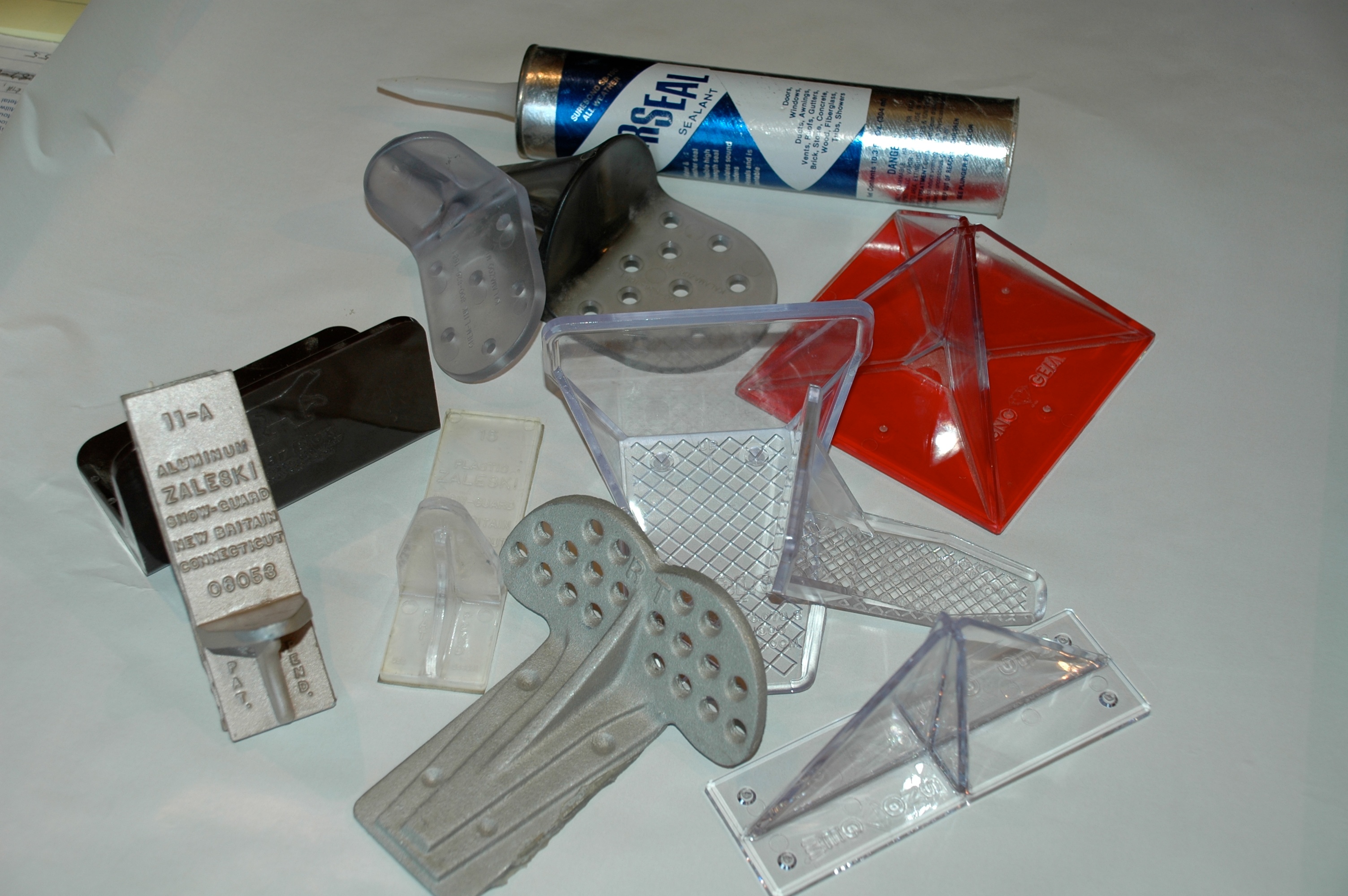 |
 |
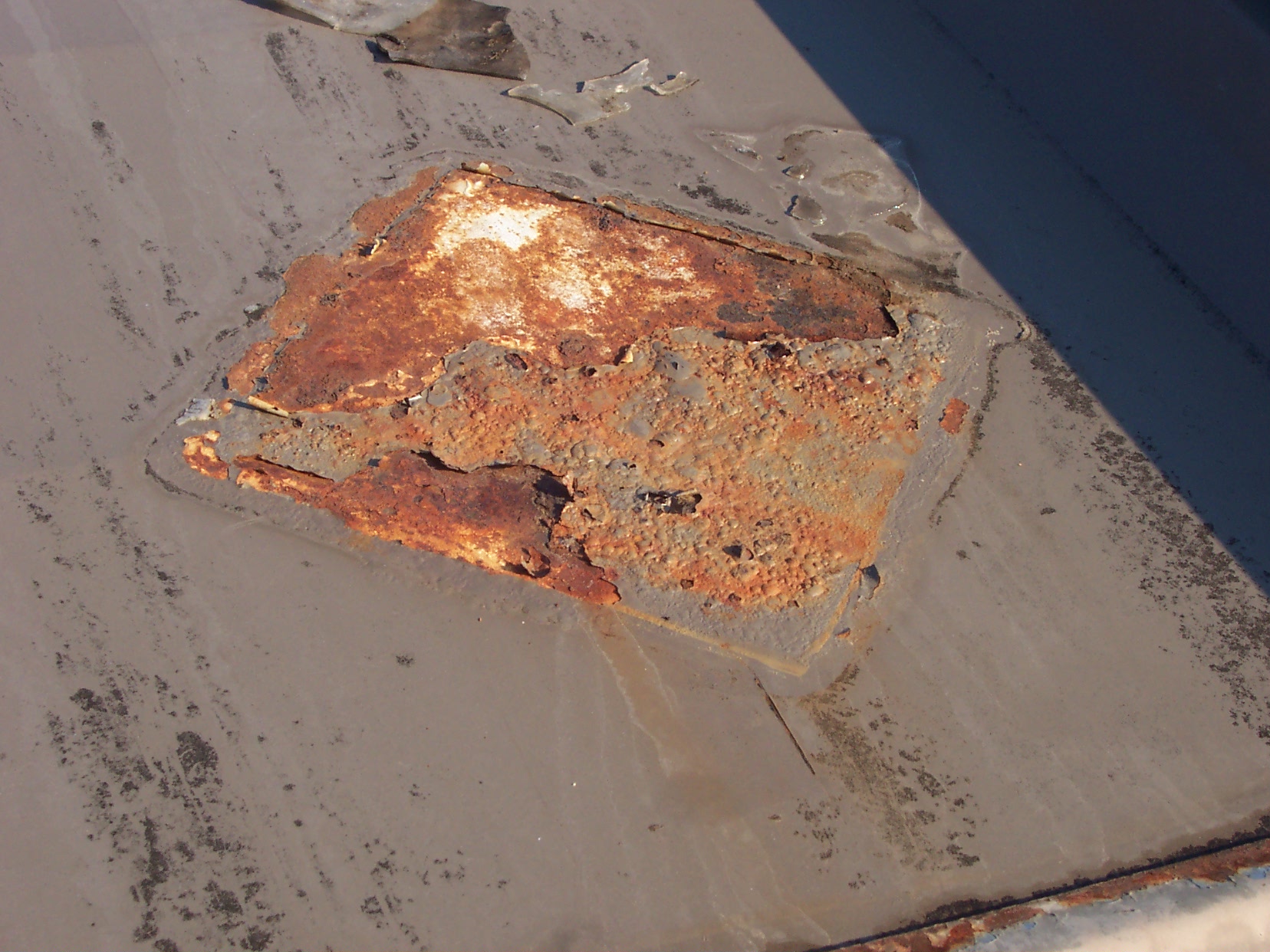 Espere esto con Stick-on Mounted
La instalación es bastante sencilla. Estas piezas se fijan directamente al tejado con una aplicación de pegamento. Pero si se examinan más detenidamente las instrucciones detalladas, la instalación se complica un poco: se requiere una cuidadosa preparación de la superficie, así como muchos días de tiempo de curado a temperaturas específicas. (De repente, esto no es tan sencillo como parecía al principio). 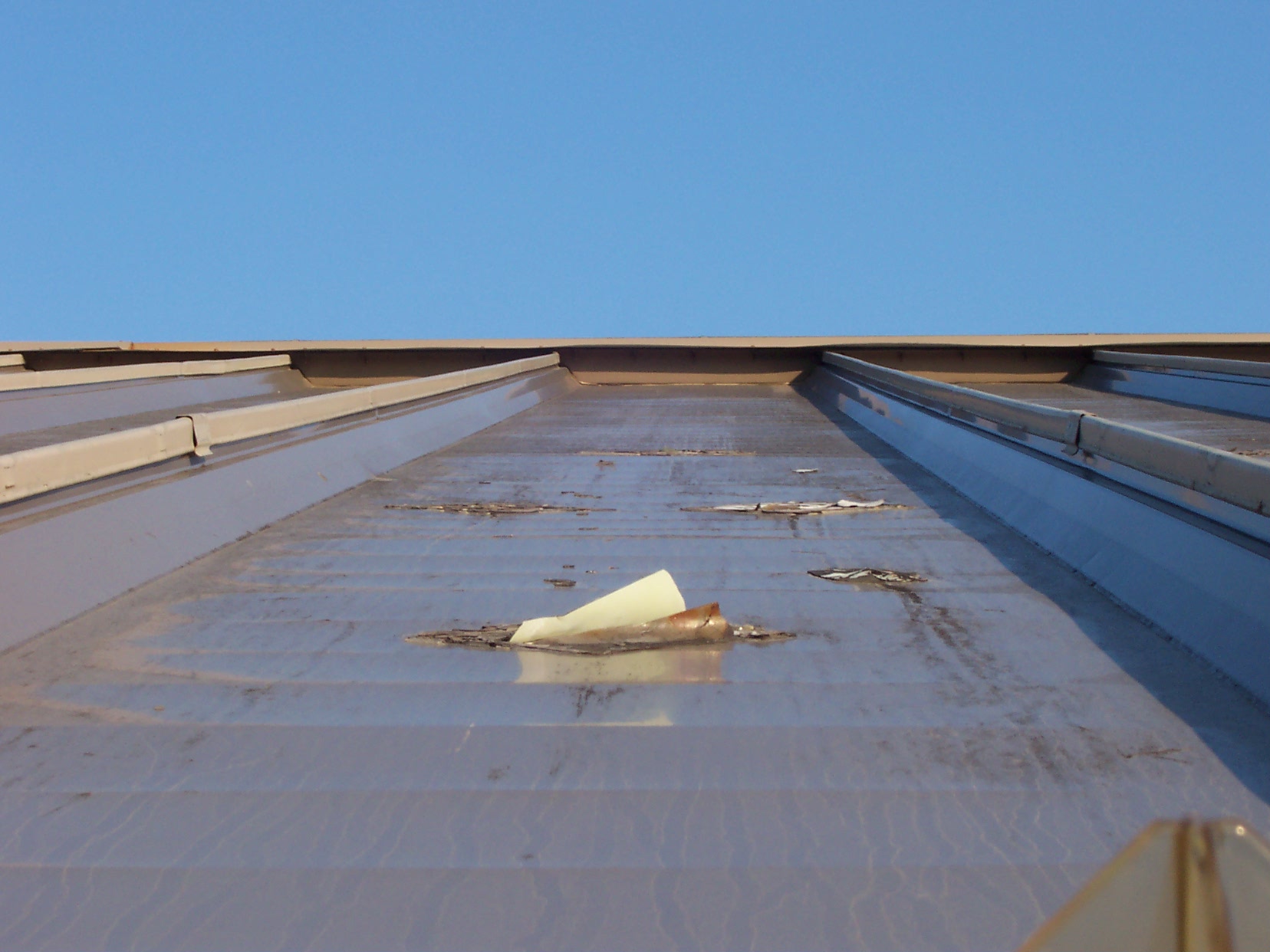
When installed, stick-on snow guards typically have the lowest holding strength (which continues to diminish with age). When they fail, they can rip away paint and protective roof coatings, causing corrosion. They also have the lowest lifespan due to the glue and/or plastic part being unable to handle the harsh elements and total exposure that is required on any roof (e.g. U.V., moisture and temperature change, etc.).
Elija la forma correcta de derretir la nieve de su tejado con seguridadIt is critical to understand the unpredictable nature of snow melt on a metal roof. But there are steps to take to thwart dangerous roof top avalanches. A quality snow retention system will help preserve your roof and allow snow drifts and snow melt to exit the roof in a more controlled manner. Learn more about installing snow retention systems with mechanical attachment via clamp mounting or structural attachment and weather proofing at S-5.com.
Don’t just believe what we say because we said it! MCA (Metal Construction Association) technical documents are the greatest aid available for snow guard selection criteria and downloads are free. Visit MCA for more information.