

By Ali Turner, Principal Writer and Content Strategist, S-5!
Metal roofs are designed to move. Panels expand and contract day after day, season after season, but problems occur when roof accessories are attached without allowing for this thermal movement. If the thermal-cycling integrity of a roof is restricted by fasteners, trims, clips or rooftop equipment, the roof can experience long-term stress, premature wear, leaks, oil canning and expensive callbacks.
This blog breaks down the essentials of thermal cycling in installer-friendly terms and explains how standing seam clamps with a Living Hinge™ design enable you to attach solar and ancillary equipment where needed without restricting panel movement.
How Much Will My Metal Roof Panels Move?
“Panels can expand and contract more than people expect,” said Jon Moss, R&D Manager, S-5! “The longer the panel, the more noticeable the thermal cycling, which is why it’s such a critical consideration on large commercial roofs.”
For installers, this means one thing: If the roof can’t move, it will move something else. That “something” is usually a fastener, clip, seam or trim detail. With the right clamp attachment method, however, you can secure accessories without penetrating the roof or restricting panel movement.
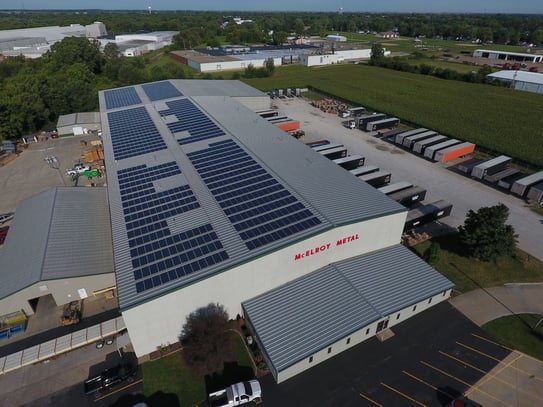
Solar panels on a commercial metal roof.
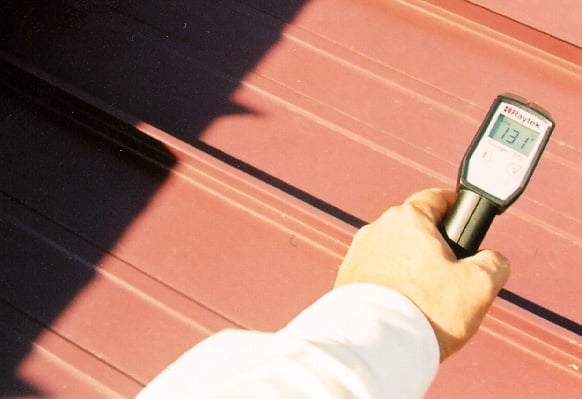
A dark-colored roof can reach surface temperatures >60 F above ambient. Nighttime radiant energy transfer can drop their temperature >20 F below ambient. “Material plays a role, too, notably that aluminum expands far more than steel,” added Moss. “It is all a function of the material’s coefficient of expansion (Ce or CTE). Then, you add in daily temperature cycles, like hot sun during the day and cooler temperatures at night, along with seasonal changes. All of those factors combine to create continuous movement that the metal roof system must accommodate.”
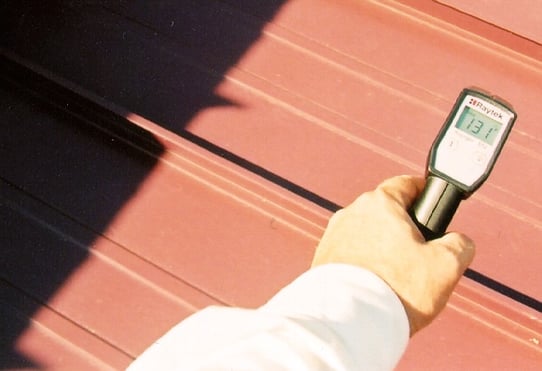
Measuring the surface temperature on a metal roof.
How Can You Attach Solar Panels Without Restricting Metal Panel Movement?
Clips are used to secure metal roof panels to the roof deck or structural framing. Longer, mechanically seamed metal panels, such as those used on commercial buildings, typically use floating clips. Floating clips involve a two-piece design. The panel is locked to the top component of the clip and moves with the panel. The base component of the clip is stationary and attached to the structure or deck. The differential movement between the two clip components allows the roof system to remain secure while still accommodating thermal expansion and contraction. An attachment clamp can be installed directly on the seam of such a system, over a clip location, without impeding thermal cycling.
Some panel systems utilize a one-piece, stationary (or “fixed”) clip with a somewhat loose connection to the panel seam. With such a design, the panel “rides” the clip frictionally when experiencing thermal cycling. So, the required differential movement takes place between the panel seam and the fixed clip.
This is where many rooftop attachment installations go wrong. If a traditional seam clamp is installed at the clip location on such a roof design, thermal cycling will be violated. Hence, (fixed) clip locations should be avoided when utilizing traditional seam clamps. One of the most common installation mistakes is pinning clips with seam clamps that restrict movement and undermine the roof's thermal-cycling design.
What’s the Best Solar Attachment Solution for Metal Roofs?
“Most traditional clamps rely on a mechanical interlock, meaning they wrap around the seam and create a dimple to lock in place,” explained Moss. “That works well as long as you’re not installing them over a fixed clip. If you do, you can unintentionally inhibit thermal movement.”
“A Living Hinge design grips the seam without pinning the panel to a fixed clip,” Moss said. “This type of technology engages a less sensitive area of the roof, which means you’re not pinning the panel or interfering with how the roof is meant to move. That’s the key advantage: secure attachment without compromising thermal performance.”
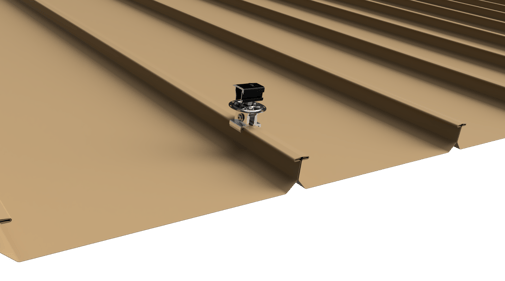
Non-penetrating Living Hinge clamp with solar mount on T-shaped metal roof profile.
Benefits of Clamps With Living Hinge designs:
- Completely Non-Penetrating – Preserves roof warranties and eliminates new fixed points
- Maintains Thermal Cycling – Helps prevent panel distortion, oil canning and seam stress
- Better Long-Term Reliability – Reduces callbacks and long-term maintenance risks
- Unrestricted Clamp Placement – Installs anywhere along the seam without concern for clip location
Why Does Thermal Expansion Matter for Long-Term Metal Roof Performance?
Metal panels must move thermally, and generate incredible forces when they do. Anything that impedes that movement creates potential failure points and can lead to issues such as oil canning and leaks.The keys to an extended roof life are correct fasteners and proper roof accessory attachment methods. The best attachment solutions work with the roof, not against it. Living Hinge clamps allow secure mounting of solar panels and ancillaries without restricting movement.
A metal roof works beautifully when installed with movement in mind. Understanding how to accommodate that movement and selecting products that respect it sets installers apart as professionals who protect both the roof and the building owner’s investment.


