¿Cuándo se fundó UL?
UL is a safety organization. It was established in 1894 by William Henry Merrill as the Underwriters’ Electrical Bureau – which was a bureau of the National Board of Fire Underwriters. Throughout the 20th century, it was commonly known as Underwriters Laboratories.
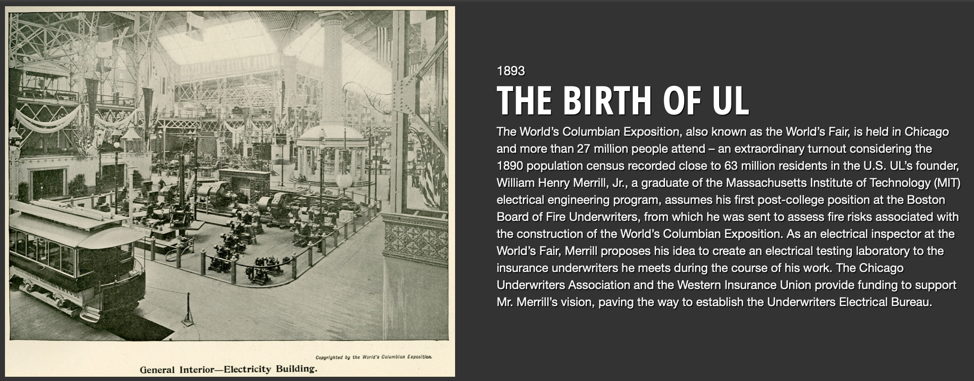
1893 Timeline Source: UL.com
Merrill era un ingeniero eléctrico de Boston al que los aseguradores enviaban a menudo a determinar el riesgo en las evaluaciones de los seguros contra incendios. Cada vez veía más la importancia de probar los materiales de construcción para determinar el nivel de riesgo. Merrill pronto empezó a desarrollar normas, pruebas y equipos de construcción. Al ver la necesidad y la importancia de este tipo de ensayos, Merrill fundó Underwriters Laboratories.
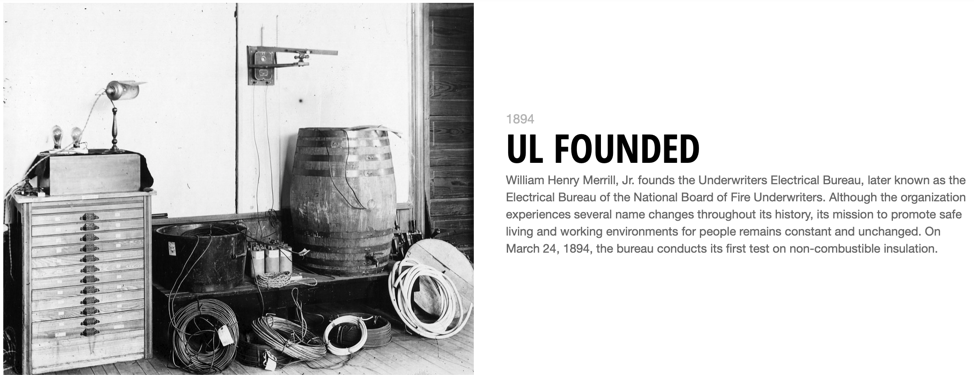
1894 Timeline Source: UL.com
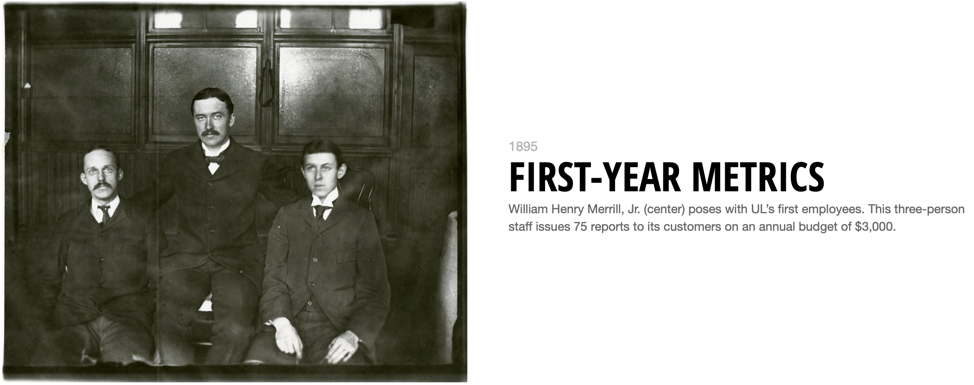
1895 Hora Fuente: UL.com
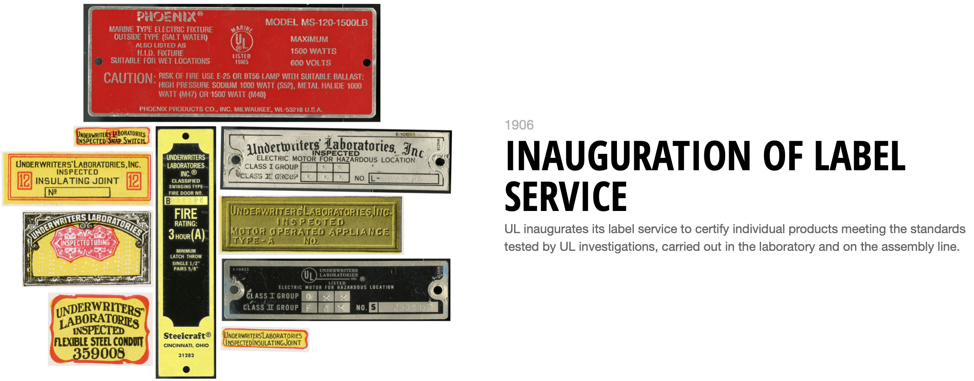
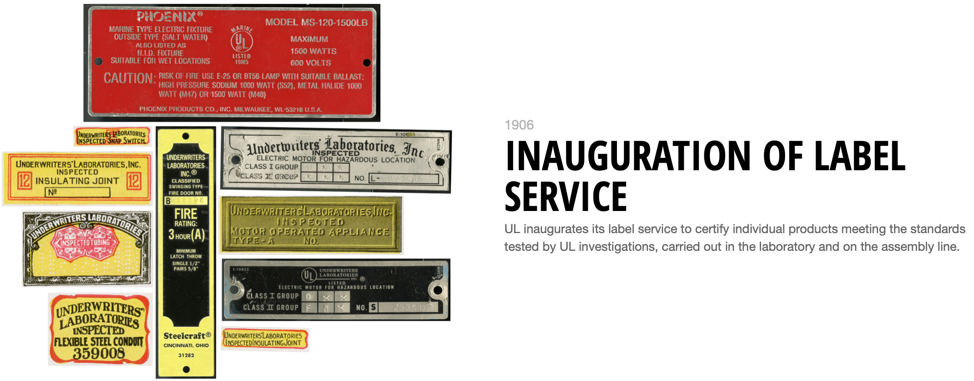
1906 Timeline Source: UL.com
La marca UL Listed
UL son las siglas de Underwriters Laboratories. La etiqueta UL se introdujo por primera vez en 1906 para demostrar que el producto había superado las pruebas. La empresa ha pasado a utilizar simplemente la abreviatura UL como nombre.
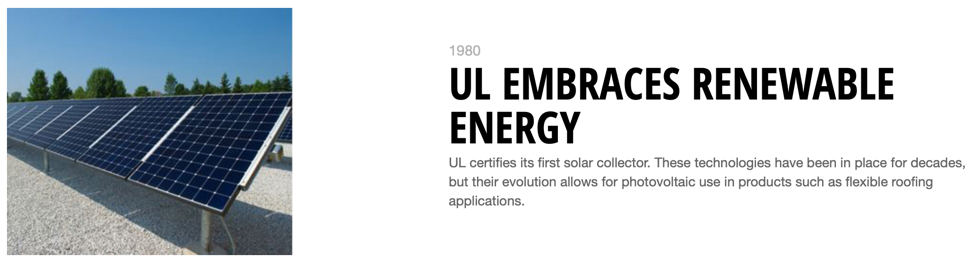
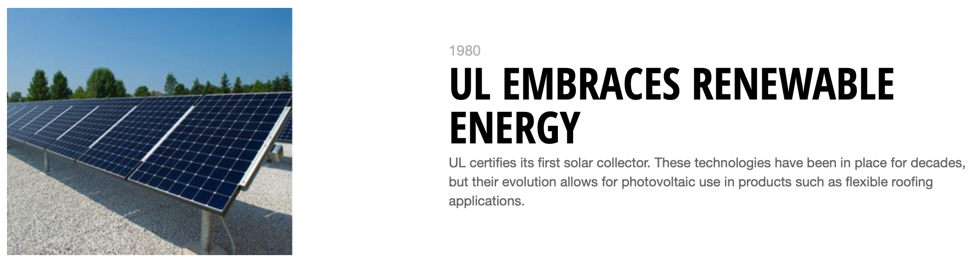
1980 Timeline Source: UL.com
¿Por qué es tan importante un listado UL?
Underwriters Laboratories is a not-for-profit organization and gains no monetary benefit from product evaluation. This means that a UL mark is an indication of authentic product operation and safety. On the same note, if a UL product is tested again and fails testing, the UL listing is removed. UL also performs periodic inspections of the products they have previously Listed. Inspectors will visit the plant where the product is manufactured to make sure that the products being sold are actually the ones on the market.
“UL Listed” versus “UL Recognized”: What’s the difference?
These two labels may sound similar, but they are very different. “UL Listed” means a product has been tested by UL “to nationally recognized Safety Standards and has been found to be free from reasonably foreseeable risk of fire, electric shock and related hazards in a Division 2 environment”. “UL Recognized” is defined as “testing and evaluation of component products that are incomplete or restricted in performance capabilities.” UL Listed is harder to achieve because it follows industry and national standards.
UL Recognized es más fácil de obtener porque los fabricantes pueden elegir componentes específicos para someterlos a ensayo en conjuntos específicos, y no el producto, la categoría o la marca que fabrican totalmente ensamblados. Esto ha llevado a las empresas a tergiversar la verdad cuando se trata de sus listados UL. Decir que algo está "listado" por UL cuando simplemente está "reconocido" es una gran publicidad, aunque falsa, porque hace que sus productos parezcan tan seguros como los de la competencia que llevan legítimamente un listado UL.
Estas afirmaciones publicitarias se basan en que el consumidor ve el símbolo mágico "UL" y piensa que "todo va bien", pero no presta mucha atención a las distintas calificaciones del listado. En este sentido, se trata de publicidad engañosa. UL se esfuerza por proteger al consumidor y distingue específicamente entre "UL Listed" y "UL Recognized" por esta misma razón.
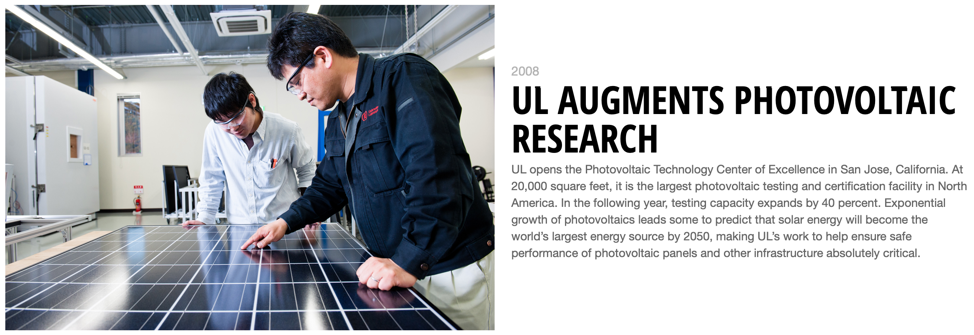
Cronología de 2008 Fuente: UL.com
Deconstrucción de palabras
Word of the Week: UL Listed
PRONUNCIATION: /juː / | /ɛl/ | | əd/
PART OF SPEECH: Noun | U is the 21st letter of the alphabet | L is the 12th letter of the alphabet****
SENTENCE: // Did you know that in many cases, the PVKIT™ 2.0 represents a savings of $6-$12 per unit and is sufficient to pay for the entire S-5-PV Direct Attachment solutions and clamp setup!****
SYNONYMS AND RELATED WORDS: Underwriters Laboratories, UL, UL Listed, UL Certification Mark, William Henry Merrill, Electrical Bureau of the National Board of Fire Underwriters, UL Recognized****
WHAT S-5! PRODUCTS ARE UL LISTED?: UL Standard 2703 - Mounting Systems, Mounting Devices, Clamping Devices and Ground Lugs for Use with Photovoltaic Modules and Panels
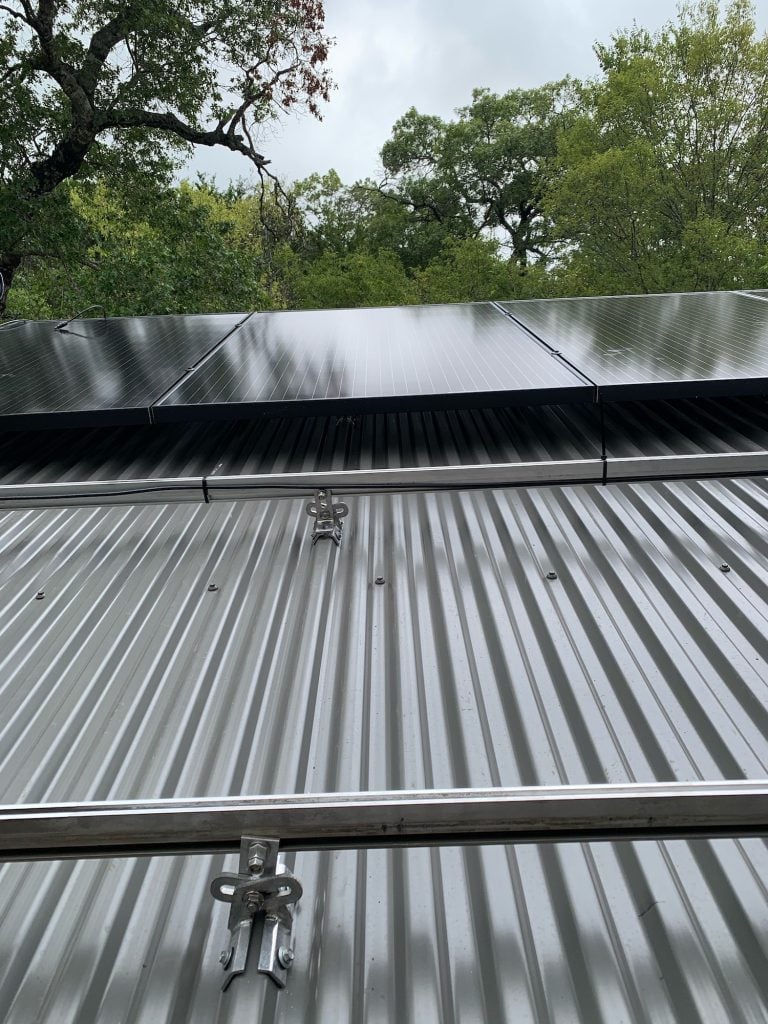
Modelos: ¡S-5! KIT FV con abrazaderas de tejado de los tipos S-5-U Mini, S-5- S Mini, S-5-T Mini, S-5-Z Mini, S-5-N Mini, S-5-E Mini, y S-5-N, S-5-U, S-5-S, S-5-T, S-5-Z, S-5-E, S-5-V, S-5-H90.
Todos los productos S-5 se utilizan para fijar módulos fotovoltaicos a cubiertas metálicas.
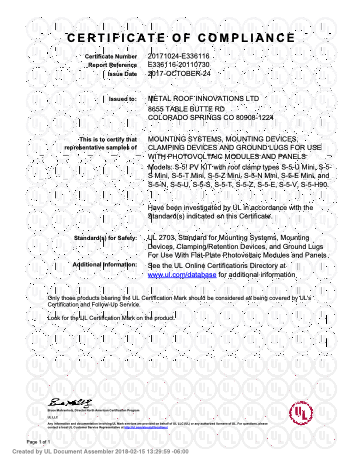
¿POR QUÉ LA LISTA UL ES IMPORTANTE PARA LOS USUARIOS, PROPIETARIOS Y CONTRATISTAS DE ENERGÍA SOLAR?
UL protects the consumer. S-5! has the aforementioned products UL Listed under UL 2703. It is a bar standard for mounting systems before they can be installed. This safety standard for PV mounting systems fall into three major categories: Mechanical Loading; Grounding/Bonding; Fire Classification
Carga mecánica
En el caso de la S-5, se trata de ensayos mecánicos de carga y montaje con módulos y sistemas de montaje. Las pruebas se realizan con carga positiva, carga negativa y carga paralela. En el caso de S-5!, se investiga la conexión entre el módulo, PV MidGrab, PV EdgeGrab, disco de montaje y conjunto PVKIT a la abrazadera.
Conexión a tierra
Specifically, the consumer should be aware that UL 2703 bonding/grounding listed racking systems are fully compliant with National Electrical Code (NEC) bonding/grounding requirements. The NEC in Article 250.4(A)(4) requires that any, “Normally non-current-carrying electrically conductive materials that are likely to become energized shall be connected together and to the electrical supply source in a manner that establishes an effective ground-fault current path”.
The long and short of all of this is that, the S-5! clamp can be considered ’”likely to become energized”. This is why it is included in the testing of UL 2703.
Clasificación de incendios
Los módulos y los sistemas de montaje se someten a pruebas de ensamblaje con tejados para establecer una clasificación de resistencia al fuego A, B o C. Esto se hace para determinar si la adición de energía fotovoltaica a un sistema de tejado afectará negativamente o no a la clasificación de resistencia al fuego del tejado. Una nota importante es que las fijaciones al tejado no entran en el ámbito de aplicación de la norma UL 2703: la norma UL 2703 está pensada para el bastidor arriba, no para el bastidor abajo.
Al final, los productos específicos S-5! que cuentan con la certificación UL cumplen la norma nacional de seguridad para el uso al que están destinados.
¡S-5! Soluciones de abrazaderas y soportes
https://www.s-5.com/products/solar-solutions/pv-kit-2/
¡¿Por qué los productos S-5! los productos de ingeniería más fiables del mercado?

Palabra de la semana: ¿Qué es la tecnología solar fotovoltaica?
Cubierta metálica solar y con fijaciones expuestas: las mejores prácticas para 2019
Montaje solar en tejados metálicos de junta alzada
…now for Metal Roof Innovations Central.

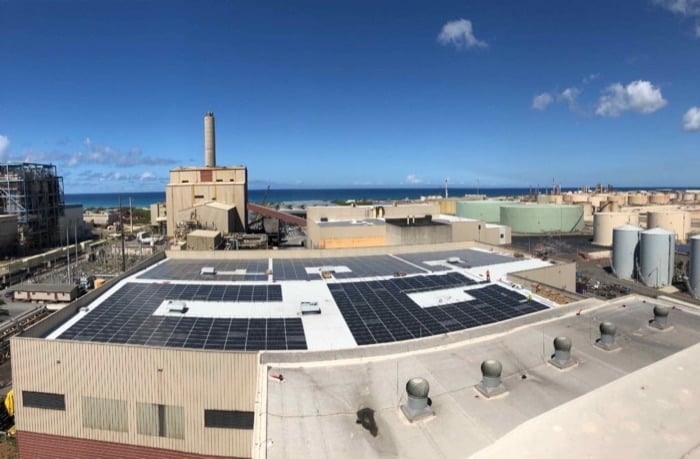
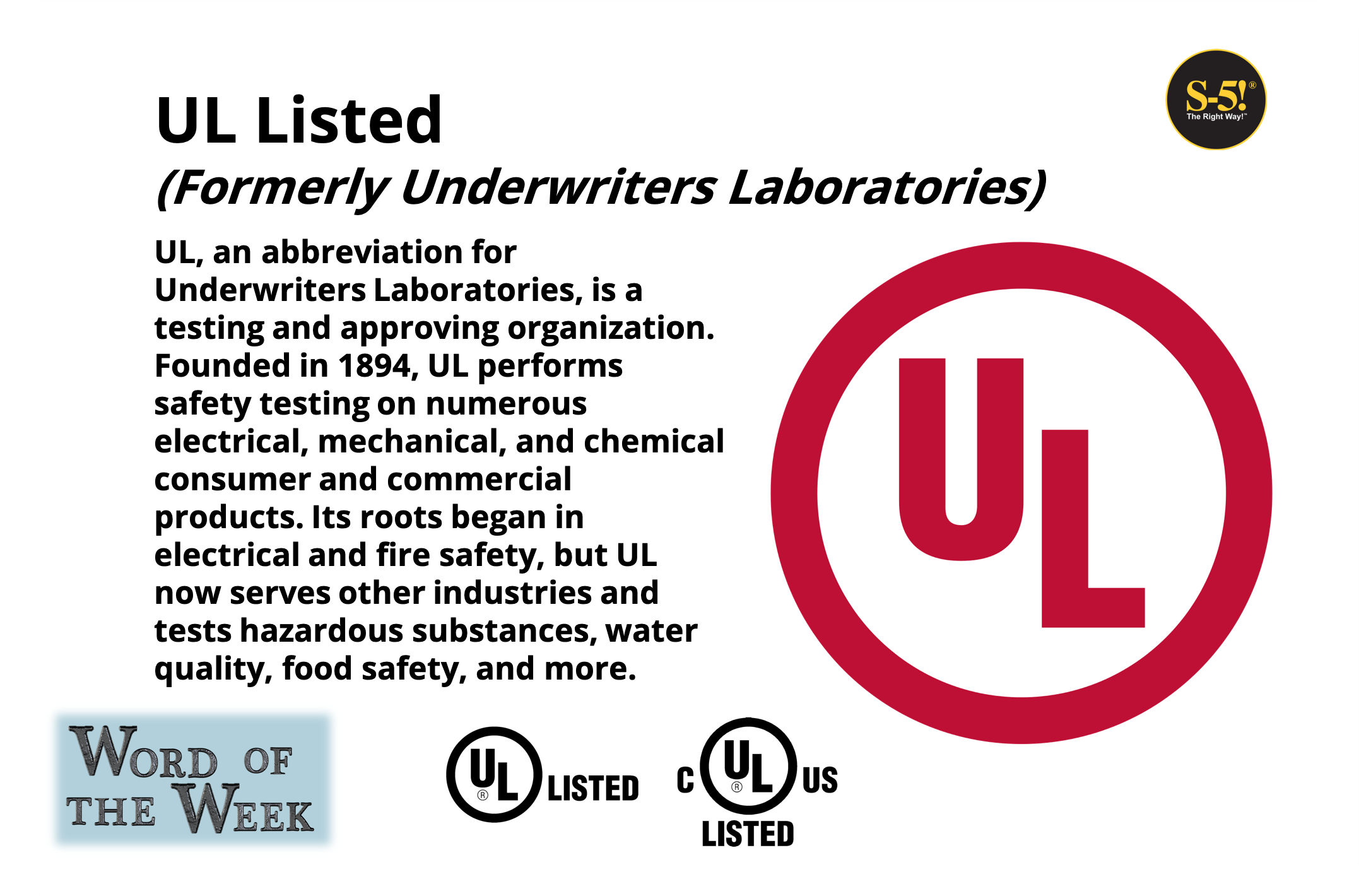 Parece verlo en todas partes: ese círculo rojo, negro o blanco con las letras "U" y "L" mayúsculas en su interior. Aparece en varios productos de nuestros hogares y lugares de trabajo. Supone, con razón, que es importante: cuando algo lleva el sello UL, significa que se ha diseñado y fabricado adecuadamente para su uso específico. Una marca UL en un producto demuestra que ha sido sometido a pruebas rigurosas para cumplir las especificaciones de seguridad determinadas a partir de los peligros potenciales y probables del producto. Significa que se puede confiar en que el producto cumpla su función cuando más se necesita.